Why IPsec VPN is Non-Negotiable for Modern Modbus Gateways
11981
419_488_71
71427321893
54121381948
91688
741
8888
519_7148
For decades, "Security by Obscurity" was the standard operating procedure for manufacturing plants, water treatment facilities, and power grids. Industrial protocols like Modbus were designed for efficiency and simplicity within a closed, trusted local network. They were never intended to face the open, chaotic environment of the public internet.
However, the rise of the Industrial Internet of Things (IIoT) and the demand for real-time remote monitoring have forced these legacy systems online. While connecting a Modbus Gateway to the internet provides immense operational flexibility, it also opens a "digital front door" to cybercriminals. This is where IPsec VPN encryption moves from being a "nice-to-have" feature to a fundamental requirement for industrial survival.
The Vulnerability of the Modbus Protocol
To understand why encryption is necessary, we must first look at the protocol itself. Developed in 1979, Modbus is the elder statesman of industrial communication. It is incredibly reliable, but it lacks any native security features.
- No Authentication: Modbus does not require a username or password to execute commands. If a device can "see" a Modbus slave, it can generally read from or write to it.
- Plaintext Communication: Data is sent in the clear. Anyone with access to the network path can use a simple packet sniffer to see exactly what registers are being read or changed.
- Lack of Integrity Checks: Modbus has basic error checking, but no cryptographic integrity. An attacker can intercept a packet, change the "Set Point" value for a critical motor, and send it on its way without the system ever knowing the data was tampered with.
When you expose a Modbus Gateway to the internet without a VPN, you are essentially broadcasting these vulnerabilities to the entire world.
What is IPsec VPN, and How Does it Work?
IPsec (Internet Protocol Security) is a suite of protocols used to secure IP communications by authenticating and encrypting each IP packet in a communication session. When integrated into a Modbus Gateway, it creates a "secure tunnel" between the gateway and the remote user or central server.
This tunnel provides three pillars of protection:
Confidentiality: Through encryption (such as AES-256), your industrial data is scrambled. Even if a hacker intercepts the data as it travels across the public internet, it appears as gibberish.
Integrity: IPsec uses mathematical hashing to ensure that data has not been altered in transit. If a single bit of the command is changed by a malicious actor, the gateway will detect the mismatch and drop the packet.
Authentication: It ensures that the gateway is only talking to a trusted, verified peer. This prevents "Man-in-the-Middle" attacks where an impostor tries to hijack the connection.

Many operators attempt to save money or time by using simple Port Forwarding to access their gateways remotely. This is the digital equivalent of leaving your front door wide open in a high-crime neighborhood.
The Rise of Industrial Search Engines
Tools like Shodan and Censys constantly crawl the internet looking for open industrial ports (like Port 502 for Modbus). An unprotected gateway can be discovered within minutes of being plugged in. Once discovered, an attacker can:
Halt Production: Send a "Stop" command to a PLC, causing immediate downtime and financial loss.
Damage Equipment: Change thermal limits or pressure set-points, leading to physical catastrophic failure of expensive machinery.
Espionage: Monitor production rates, recipes, or operational schedules to gain a competitive advantage or prepare for a larger-scale attack.
Damage Equipment: Change thermal limits or pressure set-points, leading to physical catastrophic failure of expensive machinery.
Espionage: Monitor production rates, recipes, or operational schedules to gain a competitive advantage or prepare for a larger-scale attack.
The "Air Gap" Myth
The most common argument against sophisticated encryption is the belief in the "Air Gap"—the idea that the factory floor is physically disconnected from the corporate network and the internet. In 2026, the air gap is a myth.
Maintenance laptops, remote support cellular modems, and interconnected ERP systems have created "shadow bridges" into the OT (Operational Technology) environment. A Modbus Gateway with built-in IPsec VPN acknowledges this reality. It treats the network as "Zero Trust," ensuring that even if the surrounding environment is compromised, the specific communication link to your critical assets remains encrypted and verified.
Beyond security, using a Modbus Gateway that supports IPsec natively simplifies your network architecture.
Reduced Hardware Footprint: Traditionally, you would need a separate industrial router or firewall to handle the VPN. A gateway with integrated IPsec combines two devices into one, reducing points of failure and lowering hardware costs.
Simplified Remote Access: With a VPN tunnel, a technician can use their standard SCADA software or PLC programming tools as if they were plugged directly into the local switch, without needing to configure complex firewall rules for every individual device.
Global Scalability: For companies with multiple small sites (e.g., pumping stations or solar farms), IPsec allows for a "Star" or "Mesh" topology, where all gateways securely report back to a central headquarters over standard, inexpensive commodity internet lines.
Regulatory Compliance and Future-Proofing
Governments and insurance providers are increasingly mandating stricter cybersecurity for industrial infrastructure. Standards like IEC 62443 emphasize the need for "Zones and Conduits," where communication between different parts of a system must be secured.
By selecting a gateway with IPsec VPN today, you are future-proofing your facility against:
Cyber Insurance Audits: Most modern policies now require proof of encrypted remote access.
Compliance Penalties: Critical infrastructure sectors face heavy fines if found to be using insecure, plaintext protocols over public networks.
The New Standard for Industrial Connectivity
The internet is an incredible tool for industrial efficiency, but it is an inherently hostile environment. Sending Modbus traffic over the web without protection is no longer an acceptable risk.
An IPsec VPN-enabled Modbus Gateway acts as a specialized security officer for your equipment. It wraps your vulnerable legacy traffic in a modern, military-grade armored envelope, ensuring that your data—and your physical machinery—remain under your control. In the age of digital warfare, encryption isn't a luxury; it's the foundation of operational integrity.
When you choose your next gateway, don't just ask if it can talk to your PLC. Ask if it can keep that conversation private.

Data Highway Plus to Ethernet (S02)
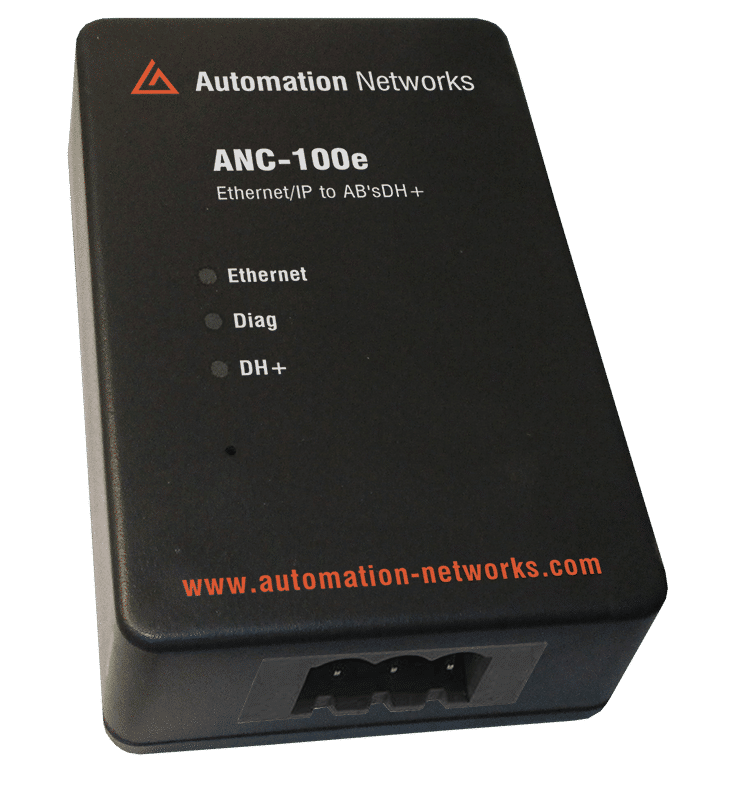
In today’s episode of The Automation Show, I unbox and setup an ANC-100e Data Highway Plus (DH+) to Ethernet Converter Data Highway Plus to Ethernet bridge from Automation Networks. For more information about the show (and how you could win an ANC-100E) check out the “Show Notes” located below the video. The Automation Show, Episode 2 Show Notes: NOTE: Would you like your … Continue readingData Highway Plus to Ethernet (S02)